
Discover the Tombs of the Kings in Paphos
Paphos is one of the most fascinating destinations in Cyprus for travellers interested in ancient history, mythology and Mediterranean culture. Among its most remarkable attractions is the Tombs of the Kings, an extraordinary archaeological site where monumental burial chambers have been carved directly into the natural rock.
Located just north of Kato Paphos Harbour, this historic necropolis offers visitors a chance to step into the world of ancient Cyprus. Its underground chambers, impressive courtyards and weathered stone columns reveal the architectural ambitions and burial traditions of a civilisation that flourished thousands of years ago.
Despite its royal-sounding name, the Tombs of the Kings was not simply a cemetery for monarchs. The site was primarily associated with high-ranking officials, members of the aristocracy and other important individuals during the Hellenistic and Roman periods.
Today, it is one of the best-known historical attractions in Paphos and forms part of the Archaeological Site of Paphos, which was inscribed on the UNESCO World Heritage List in 1980.
Whether you love archaeology, photography, architecture or discovering places with a powerful sense of history, the Tombs of the Kings deserves a place on your Cyprus itinerary.
The History of the Tombs of the Kings
The story of the Tombs of the Kings begins in the Hellenistic period, when Paphos developed into an important urban and administrative centre.
Around the end of the 4th century BC, the centre of political and economic activity shifted from the older settlement of Palaipafos, near modern Kouklia, to Nea Paphos, close to today's harbour.
As the new city grew, a large necropolis developed outside its fortified walls. This cemetery included monumental burial complexes designed for people of high social standing.
The main tombs at the site date from around the 3rd century BC onwards. The necropolis continued to be used during the Roman period, with evidence of burial activity extending into the early 4th century AD.
The tombs provide valuable information about the society that lived in ancient Paphos. Their size, layout and architectural decoration reflect the status of the people for whom they were built, while their similarities to burial monuments elsewhere in the eastern Mediterranean reveal connections between ancient cities.
The site was not abandoned from historical memory immediately after antiquity. Some tombs were later used for different purposes, including habitation during the medieval period, and parts of the ancient structures were altered over time.
Systematic archaeological excavations conducted by the Department of Antiquities from 1977 onwards revealed major tomb complexes and greatly improved our understanding of this remarkable necropolis.
Why Is It Called the Tombs of the Kings?
One of the first questions visitors ask is whether kings were actually buried here.
The name comes primarily from the impressive scale and grandeur of the tombs rather than a confirmed identification of every burial as royal.
Most of the necropolis is associated with high-ranking officials, members of the aristocracy and prominent individuals connected with the Ptolemaic administration of Cyprus, together with their families.
The island's political history is important to this explanation. Cyprus came under Ptolemaic rule in the late 4th century BC, following the end of its independent city-kingdoms.
However, the identification of individual burials remains a subject of archaeological investigation. Recent scholarship has renewed discussion about the possible use of Tomb 8 as a burial place for the last king of Cyprus, although this interpretation is not a settled conclusion.
For visitors, the name remains a useful introduction to the extraordinary architecture that makes the site so memorable.
Extraordinary Architecture Carved into Solid Rock
The Tombs of the Kings is remarkable because its most impressive structures were not built in the conventional sense. Instead, many were excavated directly into the natural limestone.
Rather than simply digging individual graves, the builders created large underground complexes with open-air courtyards, surrounding porticoes, columns and multiple burial chambers.
These designs show a sophisticated understanding of space, construction and architectural symbolism.
Monumental Courtyards
Many of the larger tombs are organised around rectangular courtyards cut into the rock.
These open spaces are surrounded by covered walkways, creating an architectural arrangement reminiscent of courtyards in important houses and public buildings.
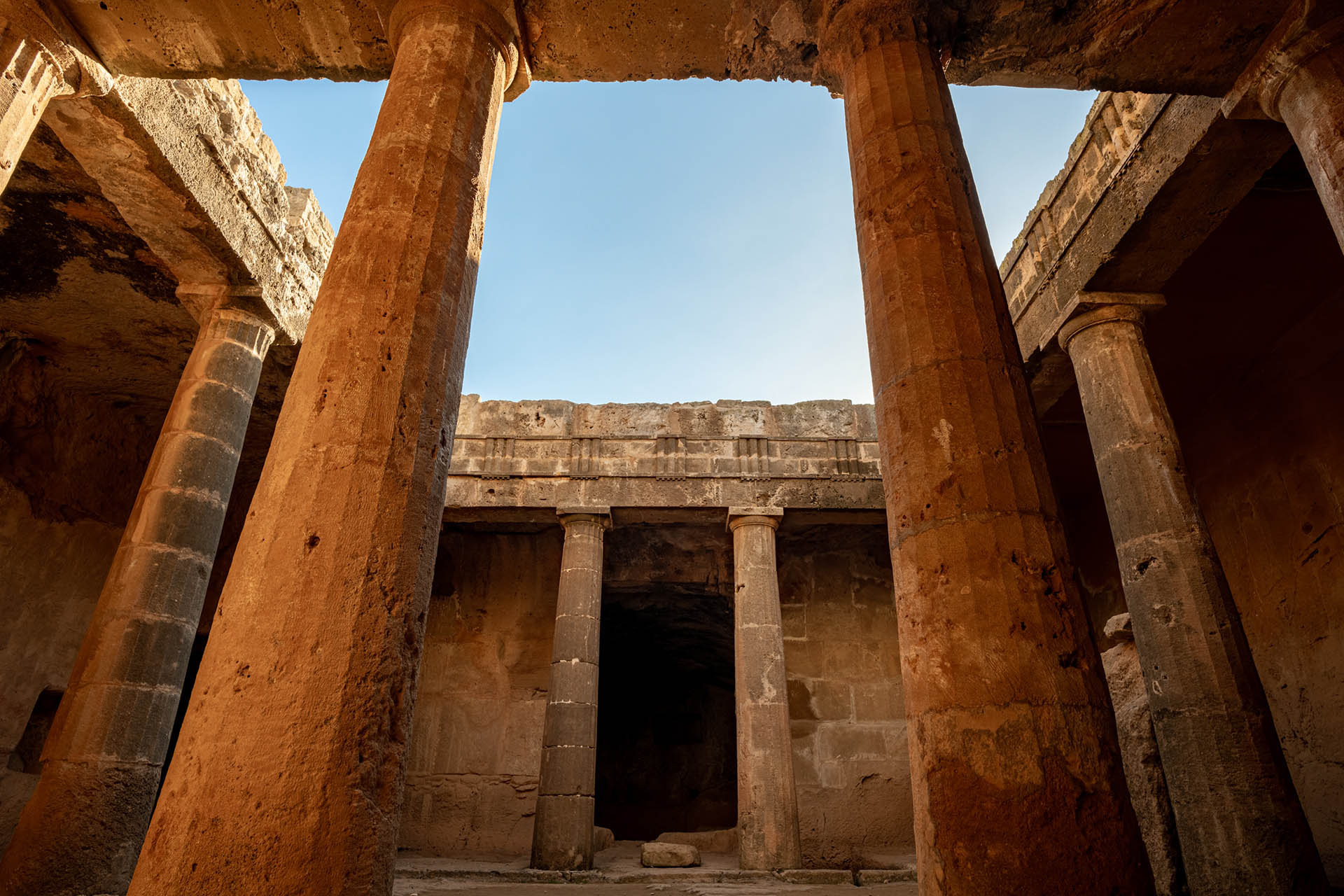
The design is particularly striking because the courtyard, columns and surrounding rooms form a complete architectural composition below the original ground level.
Walking around these spaces allows visitors to appreciate the scale of the work required to create them.
Doric Columns and Porticoes
Some tombs feature Doric-style columns or pillars supporting porticoes around the courtyards.
The columns are among the site's most recognisable features, giving certain tombs the appearance of monumental buildings rather than conventional burial places.
Their design reflects the influence of Greek architectural traditions during the Hellenistic period.
These details also demonstrate how the people of ancient Paphos adopted and adapted architectural ideas circulating throughout the eastern Mediterranean.
Underground Burial Chambers
The burial chambers are another important feature of the site.
Rooms were cut into the walls surrounding the courtyards, while smaller individual burial spaces, known as loculi, were also carved into the rock.
The arrangement of these spaces varied between tombs, reflecting differences in design and burial requirements.
Although much of the original decoration has disappeared, fragments of painted plaster have survived in some places, suggesting that the interiors were once more richly decorated than they appear today.
Tombs Designed Like Houses
Some burial complexes imitate the architecture of houses belonging to the living.
Their courtyards and surrounding porticoes resemble domestic architectural layouts, creating a symbolic connection between the world of the living and the resting place of the dead.
Similar architectural traditions are found at sites such as Alexandria, demonstrating cultural connections between Paphos and other major centres of the Hellenistic world.
This is one of the reasons the Tombs of the Kings is so important to archaeologists studying ancient architecture and burial customs.
What Can You See During Your Visit?
The archaeological site includes several distinct tomb complexes, each offering a different perspective on ancient burial architecture.
Rather than viewing the site as a single monument, take time to explore its separate courtyards, chambers and architectural details.
The Large Rock-Cut Tomb Complexes
The larger tombs are among the most impressive parts of the site.
Their scale, carved courtyards and surviving columns reveal how much effort was invested in creating monumental burial places for members of the ancient elite.
Look carefully at the relationship between the open courtyards and the underground chambers. The way the structures are integrated into the natural rock is one of the site's defining characteristics.
Ancient Stone Columns
The surviving columns and pillars are excellent examples of Hellenistic architectural influence.
They also make striking photographic subjects, particularly when viewed against the open sky and the surrounding limestone landscape.
Notice how the columns frame the courtyards and create a sense of order within the underground complexes.
Carved Chambers and Burial Niches
Smaller chambers and burial niches offer a more intimate perspective on ancient funerary practices.
These spaces were designed to accommodate burials within the larger tomb complexes and help explain how the monuments functioned as collective burial places.
The details vary between tombs, making it worthwhile to look closely rather than assuming that every complex was identical.
The Landscape Around the Tombs
The site is not only about the tombs themselves.
The open archaeological landscape, pale limestone, natural rock formations and Mediterranean light create a distinctive atmosphere.
Take time to appreciate the setting and the way the ancient structures blend into the terrain. The landscape also provides a reminder that the northern edge of ancient Paphos was once an important area beyond the city's fortified walls.
What Do the Tombs Tell Us About Ancient Paphos?
The Tombs of the Kings provides information that goes far beyond ancient burial practices.
Social Status and Power
The size and architectural complexity of the monuments indicate that their occupants belonged to influential social groups.
Constructing such elaborate burial places required resources, skilled labour and access to architectural knowledge.
The tombs therefore offer evidence of the social hierarchy and administrative importance of Hellenistic Paphos.
Cultural Connections Across the Mediterranean
The similarities between the tombs and burial architecture found in places such as Alexandria, Delos, Pergamon and Priene show that ancient Paphos was connected to wider architectural traditions.
These connections help illustrate how ideas and artistic styles travelled across the Mediterranean during the Hellenistic period.
Burial Traditions and Beliefs
Tomb design can also reveal how communities approached death, remembrance and family relationships.
The organisation of burial chambers and collective spaces provides clues about the practices of the people who used the necropolis.
Although many questions remain for archaeologists, the site is an important source of evidence about ancient Cypriot society.
The Tombs of the Kings and UNESCO World Heritage
The Tombs of the Kings forms part of the wider Archaeological Site of Paphos, which was added to the UNESCO World Heritage List in 1980.
The protected archaeological area includes monuments associated with ancient Nea Paphos and Palaipafos, reflecting the region's long history and its importance in the ancient Mediterranean.
Other celebrated features of the wider Paphos archaeological heritage include Roman villas decorated with elaborate mosaics, ancient public buildings, fortifications and the sanctuary of Aphrodite at Kouklia.
The Tombs of the Kings contributes a particularly important element to this heritage because it preserves an exceptional example of monumental Hellenistic and Roman burial architecture.
For visitors, its UNESCO connection is a reminder that Paphos is not simply a seaside holiday destination. It is also a place of outstanding historical and archaeological significance.
Opening Hours and Entrance Fee
Published official visitor information lists the following opening hours and entrance fee.
Summer season (16 April–15 September): Daily, 08:30–19:30.
Winter season (16 September–15 April): Daily, 08:30–17:00.
Entrance fee: €2.50 per person, according to the published listing.
Closed: Christmas Day, New Year's Day and Greek Orthodox Easter Sunday.
These details may change, so confirm the current schedule and admission price before visiting. The Department of Antiquities has also published multi-site entry cards for visitors planning to explore several archaeological attractions in Cyprus.
If you are visiting in winter, plan to arrive early enough to explore the site without rushing before closing time.
Accessibility and Visitor Tips
The Tombs of the Kings is an outdoor archaeological site with uneven ground, steps and underground chambers.
The site is listed as partially accessible to wheelchair users, primarily for viewing from above. Access to individual tombs may be difficult because of steps and changes in ground level.
To make your visit more comfortable:
Wear comfortable shoes with good grip.
Bring water and sun protection, particularly in summer.
Allow enough time to explore the different tomb complexes.
Take care on steps and uneven rock surfaces.
Respect the ancient structures and do not climb on fragile remains.
Check the latest visitor information if you have specific accessibility needs.
How long should you allow? Around 1–2 hours is a reasonable planning estimate for a relaxed visit, depending on your interest in archaeology, photography and the individual tombs.
The site is particularly rewarding for travellers who enjoy exploring at their own pace rather than moving quickly between attractions.