Tours in Paphos: how the day usually looks
Paphos is compact enough that almost every excursion starts within twenty minutes of where you're staying. Morning departures leave between 08:00 and 09:30, which is when the light is good, the roads are quiet and the sea is at its flattest. Afternoon and sunset departures start between 15:00 and 17:30 depending on the season.
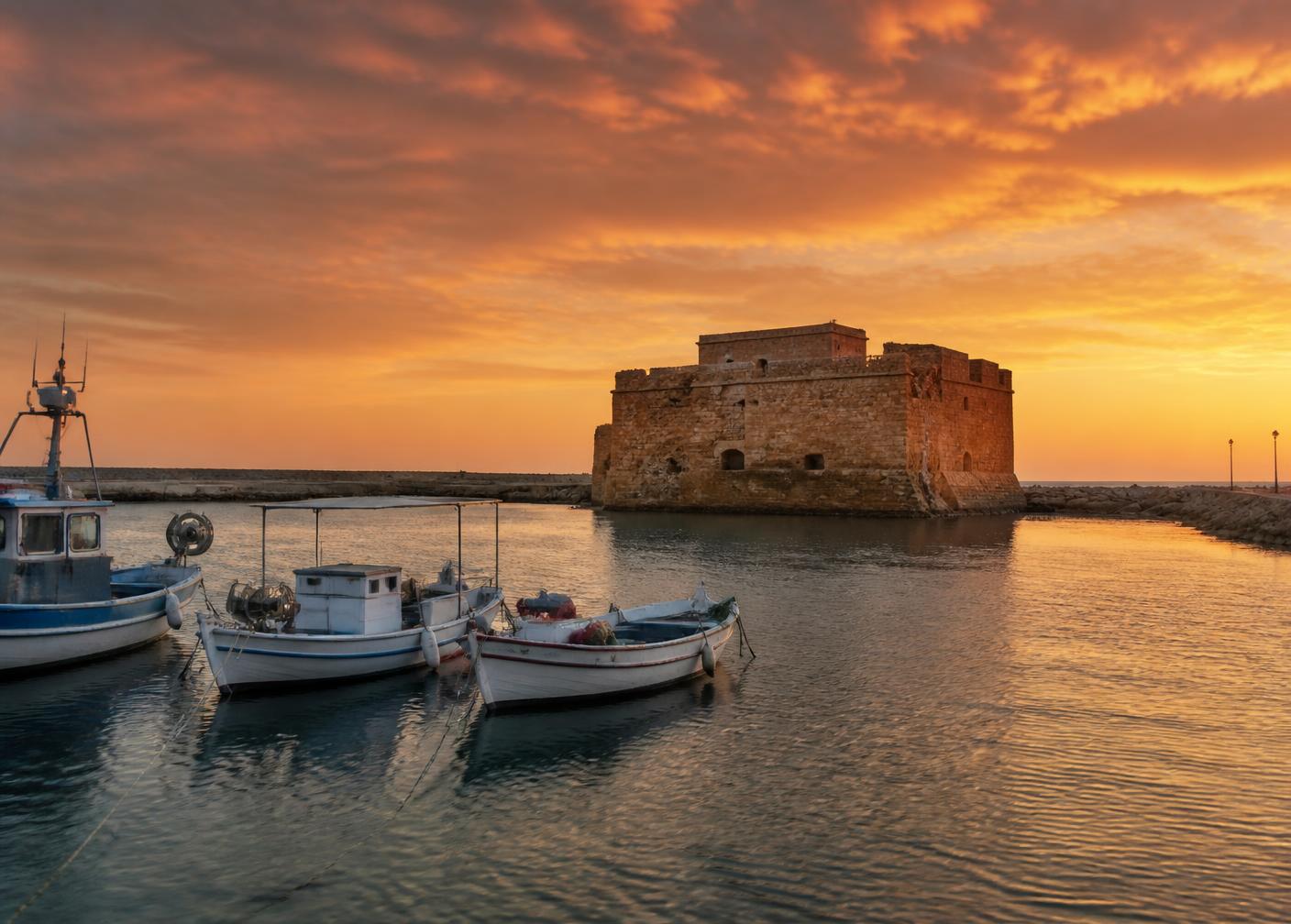
Most operators run hotel pickup across the Paphos strip, Kato Paphos, Coral Bay, Chlorakas, Kissonerga and Peyia. If you're staying further out — Polis, Latchi, Pissouri — you'll usually meet at Paphos harbour or the departure point directly, which is stated on each experience page before you pay.
A full-day tour is genuinely a full day: seven to nine hours including transfers, a lunch stop and one or two swims. Half-day options run three to four hours and leave the rest of the day free, which matters more than people expect in July when the afternoon heat pushes everyone back indoors.
Choosing between safari, sea and saddle
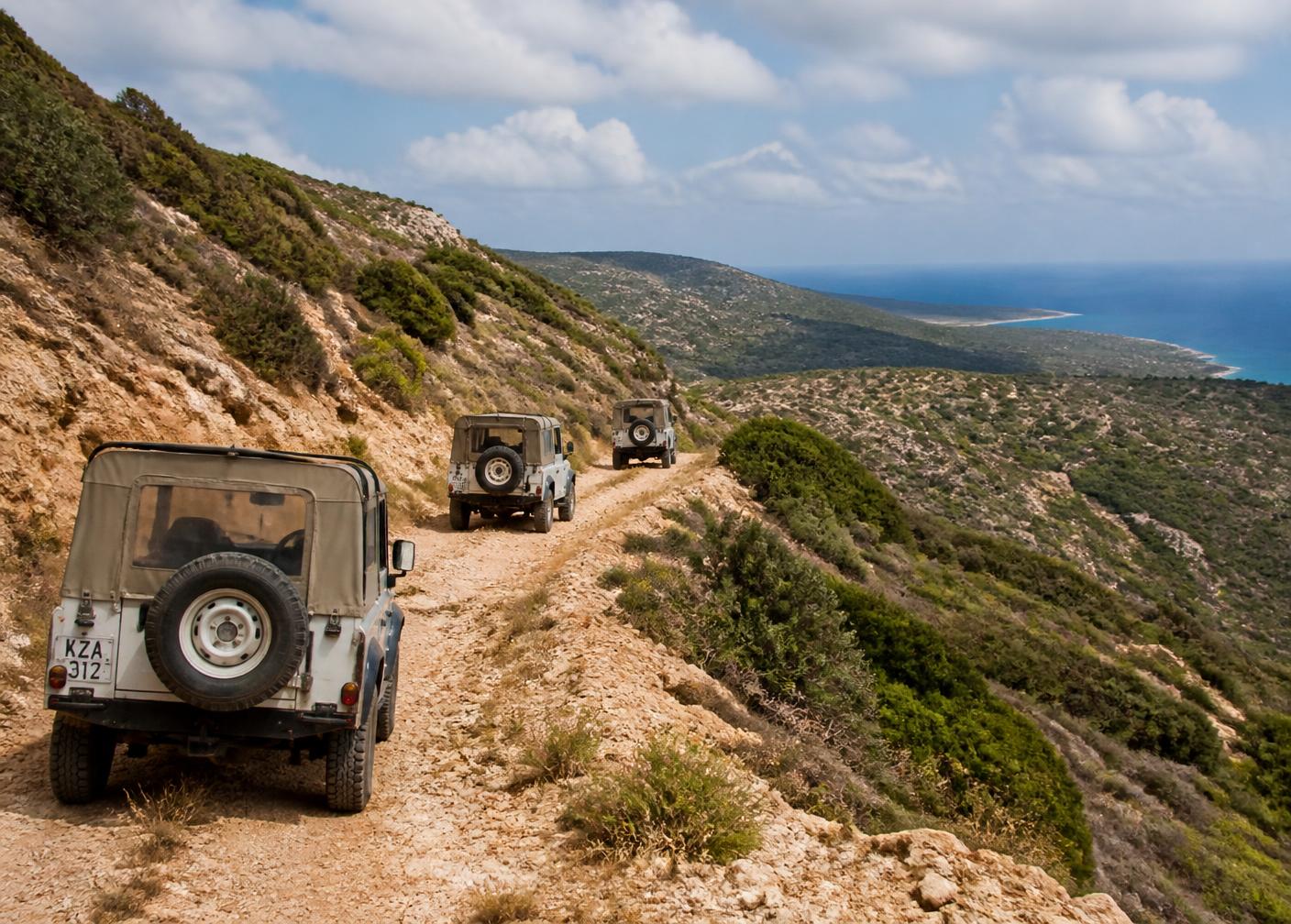
A jeep safari is the right choice when you want to see the interior of the Akamas or the Troodos foothills. These are places a hire car cannot legally or practically reach — most Cyprus rental contracts exclude unsurfaced roads, and the tracks up to Lara Bay and around Avakas Gorge are exactly that. You get gorges, viewpoints, mountain villages and typically a swim stop on an empty beach.
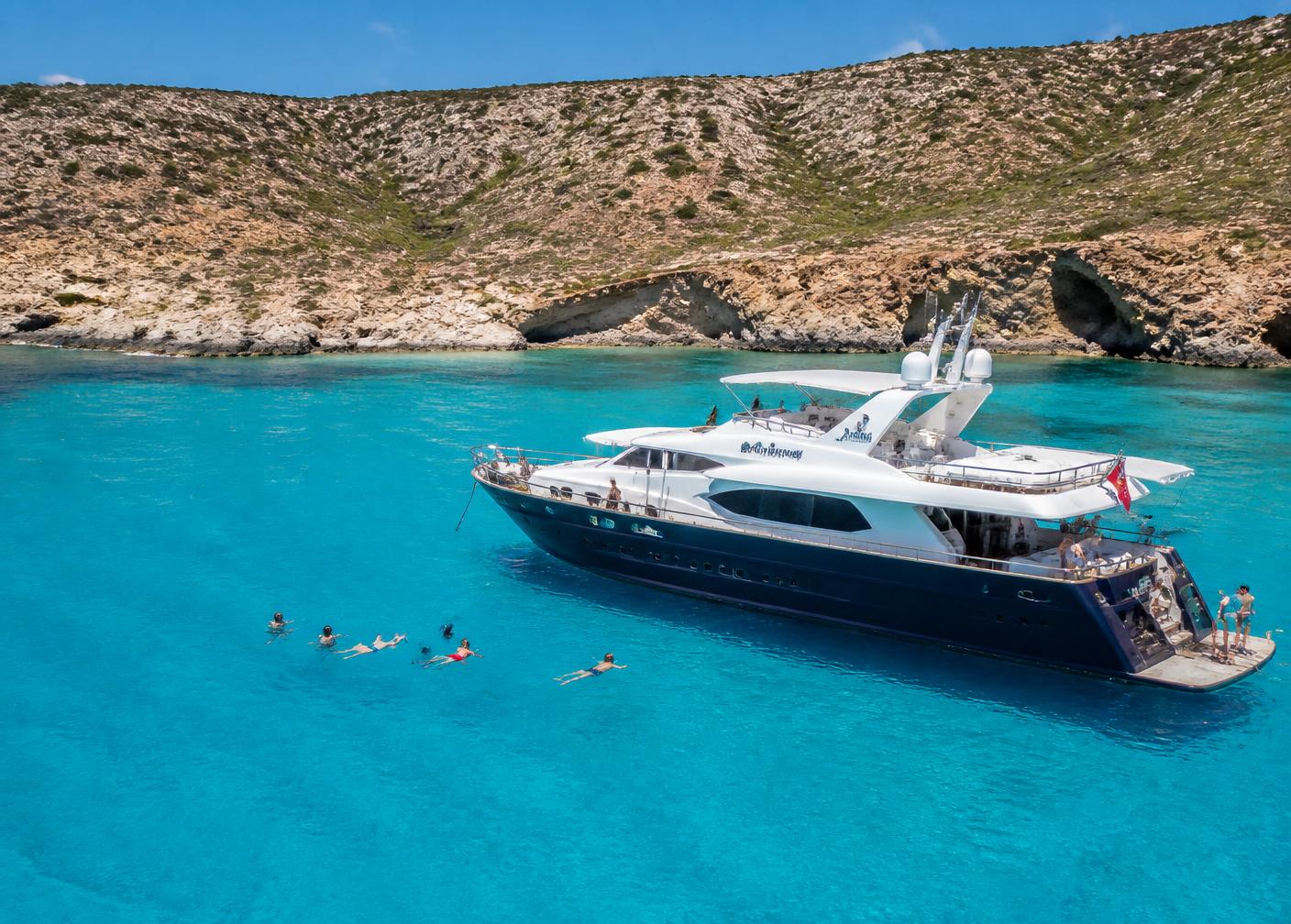
A boat cruise is the right choice when the water is the point. Paphos harbour to the Blue Lagoon takes about two hours each way past the sea caves and the whole Akamas coastline, with time anchored in the lagoon for swimming and snorkelling. Shorter coastal cruises and sunset sailings cover the same coast in a smaller window.
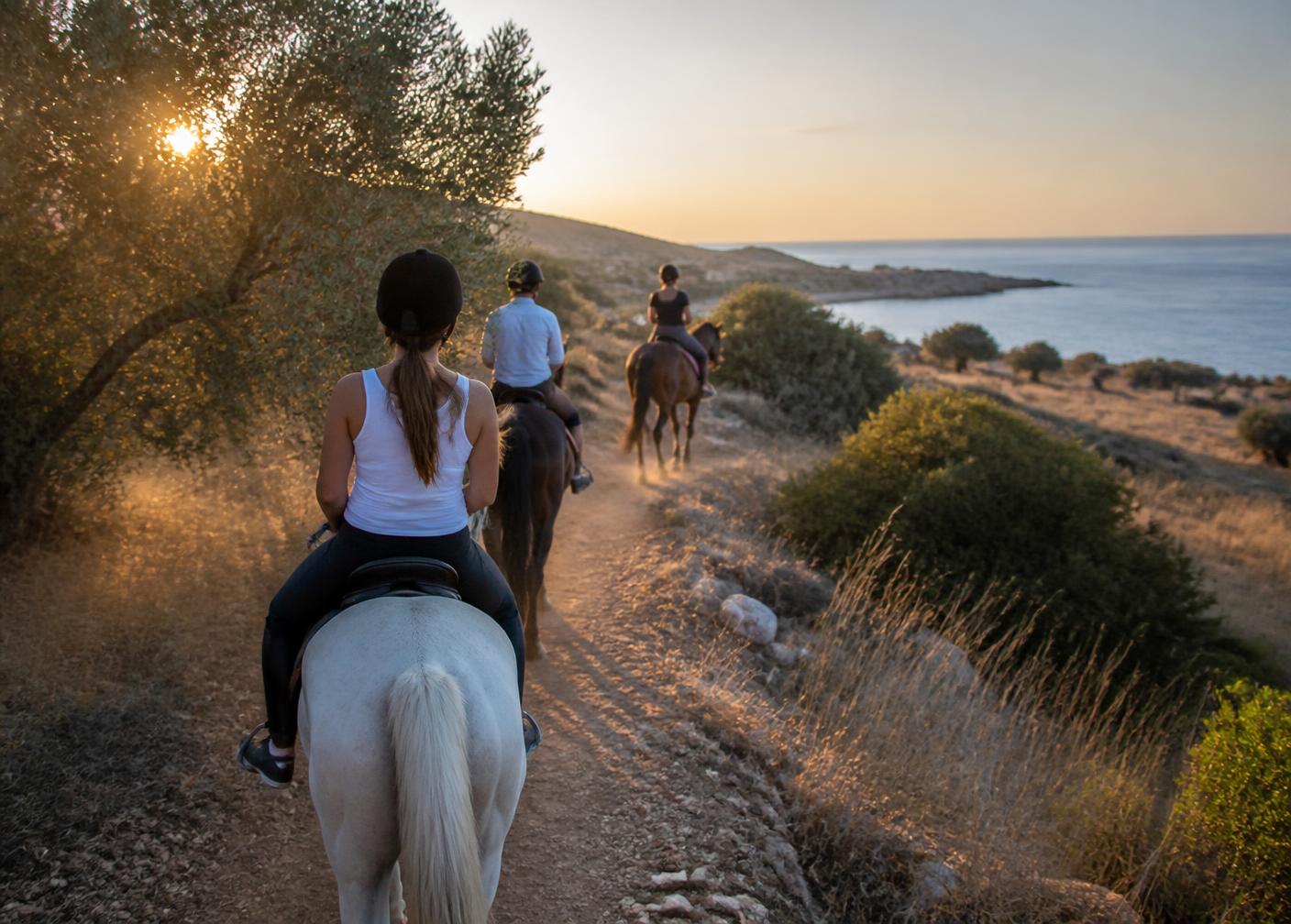
Horse riding sits somewhere between the two — quieter, slower, and the only way to arrive at the shoreline at walking pace with the sea on your right. Beginners are genuinely catered for; the coastal sunset ride is the most-booked slot of the week in summer.
When to visit, month by month
April and May: wildflowers across the Akamas, sea around 20°C, everything open and nothing crowded. Ideal for safaris and walking, slightly cool for long swims.
June to August: sea at 26–28°C, boats running at full frequency, land temperatures often above 33°C inland. Book morning or sunset departures and treat midday as pool time.
September and October: arguably the best window — the sea holds its summer warmth, the crowds drop after the first week of September, and inland tours become comfortable again.
November to March: mild, green and quiet. Archaeological sites, gorge walks and village tours are at their best; boat schedules reduce and some cruises pause until spring.
Getting around and what it costs
Paphos International Airport is fifteen minutes from Kato Paphos. Taxis, pre-booked transfers and buses all serve the strip, and the 612/615 bus routes connect the harbour with Coral Bay cheaply if you're not hiring a car.
Expect roughly €30–€50 per adult for a half-day activity, €55–€95 for a full-day safari or Blue Lagoon cruise, and €90–€200 per person for private charters and bespoke itineraries. Children are typically half price, and infants often travel free on boats.
Bring cash for taverna lunches in the villages — several still don't take cards — and note that most tours include water but not alcoholic drinks.
Practical advice from people who run these tours
Sunscreen fails faster on the water than anywhere else on the island; reef-safe factor 50, reapplied after every swim, is the standard advice from every skipper working out of Paphos harbour.
On safari days wear closed shoes. Gorge floors are loose rock and several viewpoints involve a short scramble. Sandals will end the walking part of your day early.
Motion sickness on the Blue Lagoon crossing is common in the afternoon when the wind picks up; take tablets before boarding rather than after, and sit mid-deck.
Finally, book the sea day early in your trip. If weather cancels it, you still have days left to rebook — a lesson that most visitors learn on their last morning.