
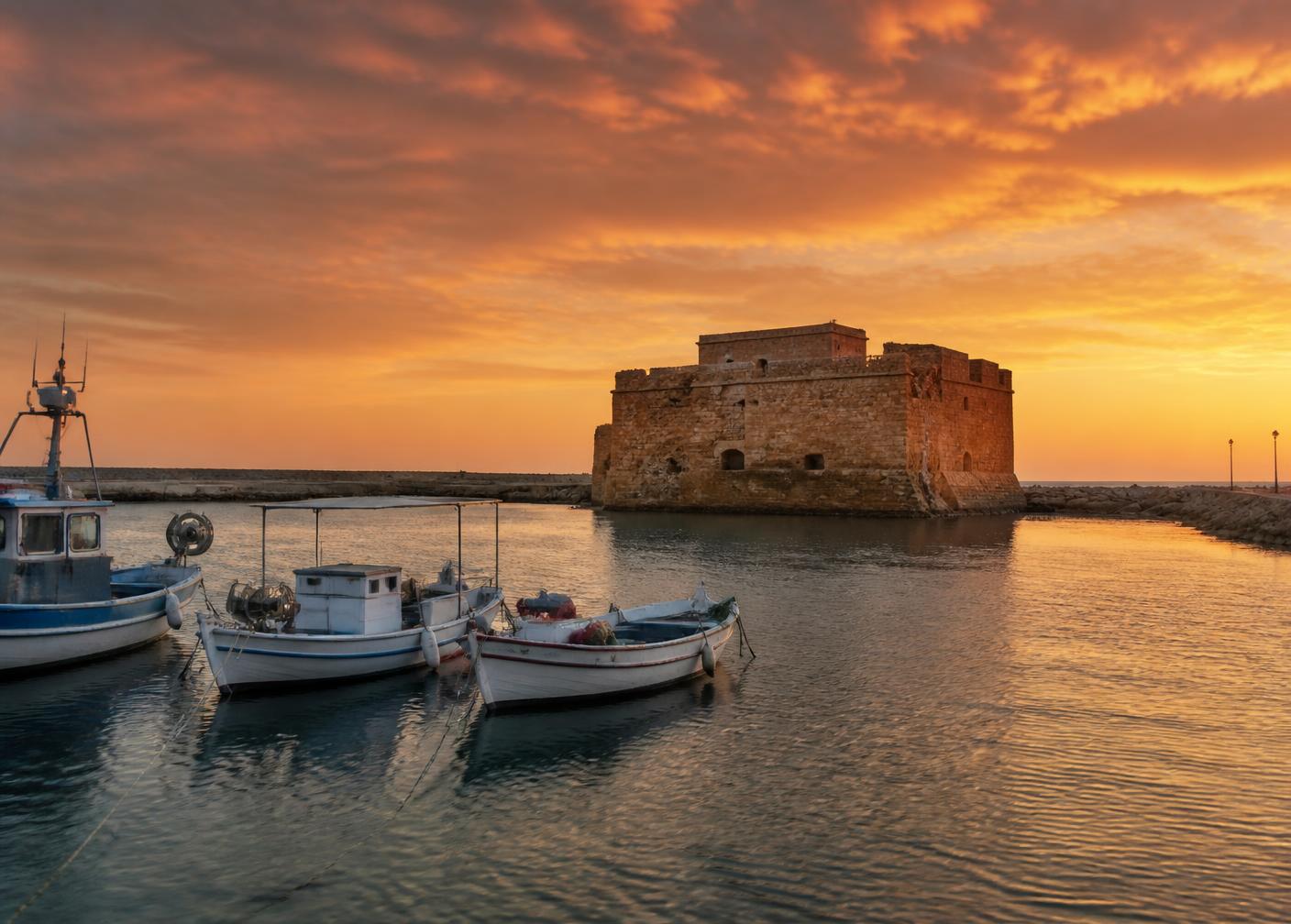
Standing proudly at the western end of Paphos Harbour, Paphos Castle is one of the most recognisable historical landmarks in Cyprus. Surrounded by the Mediterranean Sea, fishing boats, waterfront cafés and the lively harbour promenade, this small but impressive fortress offers visitors a glimpse into the island's fascinating past.
Although the castle is not as large as some of Europe's famous fortresses, its strategic position and centuries of history make it an essential stop for anyone exploring Paphos. It has witnessed different rulers, military conflicts and changes in the island's history, serving various purposes throughout the centuries.
Today, Paphos Castle is a popular attraction for visitors interested in history, architecture, photography and coastal scenery. Whether you are spending a few hours around the harbour or exploring the wider archaeological attractions of Kato Paphos, the castle is well worth including in your itinerary.
Where Is Paphos Castle?
Paphos Castle is located directly beside Paphos Harbour in Kato Paphos, on the southwestern coast of Cyprus.
Its position makes it easy to combine a visit with several other attractions in the area. The harbour promenade offers beautiful sea views, while nearby restaurants, cafés and shops provide convenient places to relax after exploring the historic site.
The castle is also close to the Archaeological Park of Kato Paphos, an important archaeological area known for its ancient ruins and remarkable Roman mosaics.
Because of its central location, Paphos Castle is suitable for visitors who want to discover the area's history without travelling far from the main tourist district.
The History of Paphos Castle
Byzantine Origins
The original fortification was built during the Byzantine period to help protect Paphos Harbour from attacks and secure an important coastal location.
The harbour played a significant role in maritime activity, making its defence an important concern for the rulers of Cyprus.
Over time, the original fortifications were damaged and replaced as different powers gained control of the island.
The Lusignan Period
During the 13th century, the Lusignan rulers rebuilt the castle as part of their efforts to strengthen the island's coastal defences.
The fortress formed part of a wider defensive system around Paphos and replaced the earlier Byzantine stronghold of Saranta Kolones, which had been damaged by an earthquake.
During the medieval period, the castle's position overlooking the harbour made it strategically valuable.
Venetian Destruction
Before the Ottoman conquest of Cyprus in 1570, the Venetians dismantled the castle's defences so that the approaching Ottoman forces could not use the fortress against them.
This was part of a wider defensive strategy adopted during a period of growing military pressure on the island.
Ottoman Restoration
Following their conquest of Cyprus, the Ottomans restored the surviving western tower in 1592, as recorded in the inscription above the castle entrance.
The building that visitors see today reflects this restoration, together with elements from earlier Frankish and Venetian phases.
The fortress was designed as a compact defensive structure, with thick stone walls, small openings and a commanding position beside the sea.
From Fortress to Historic Monument
In 1878, when the British took over the administration of Cyprus, the castle's cannons were removed.
The building was subsequently used as a salt store during the British period, a very different role from its original military purpose.
In 1935, it was declared an Ancient Monument and became protected as part of Cyprus's historic heritage.
Its surviving structure now serves as a reminder of the different civilisations and powers that shaped Paphos over many centuries.
What Can You See at Paphos Castle?
The Impressive Stone Exterior
The castle's square stone tower and solid walls create a striking contrast with the blue Mediterranean Sea.
Its simple, robust architecture reflects its defensive purpose rather than the decorative style of a royal palace.
From outside, visitors can appreciate the fortress's position at the end of the harbour and capture photographs with the sea and waterfront in the background.
The Entrance and Historic Inscription
The castle has a single main entrance. Above it, an inscription records the Ottoman restoration of the fortress.
This detail provides a direct connection to one of the most important periods in the building's history.
The Interior Rooms
Inside, the castle contains a central hall and smaller rooms along its sides.
During the Ottoman period, some of these rooms were used as prison cells. The building also accommodated members of the small military garrison.
Although the interior is relatively compact, it helps visitors understand how the fortress functioned and how its spaces were used over time.
The Rooftop and Harbour Views
The upper level offers a different perspective on the surrounding area. Visitors can appreciate the harbour, the Mediterranean coastline and the waterfront promenade from the castle's elevated position.
The rooftop's battlements also reveal something of the building's original defensive design.
Photography enthusiasts should look for views that combine the castle's stone architecture with the sea, boats and harbour surroundings.
Best Time to Visit Paphos Castle
Paphos Castle can be visited throughout the year, but the experience changes depending on the season and time of day.
Early morning: A good option for visitors who prefer a quieter atmosphere and softer light for photography.
Late afternoon: The harbour is often particularly pleasant at this time, with warm Mediterranean light illuminating the stone walls and waterfront.
Around sunset: The surrounding promenade can be beautiful as the sky changes colour over the sea. Check the castle's closing time if you plan to enter the monument.
Spring and autumn: These seasons are often comfortable for exploring Paphos on foot, especially if you plan to combine the castle with other outdoor attractions.
During summer, consider visiting earlier or later in the day and carrying water, sunscreen and a hat.
What to See Near Paphos Castle
One of the best reasons to visit Paphos Castle is its proximity to other attractions.
Paphos Harbour
The harbour is one of the liveliest areas in Kato Paphos, with boats, restaurants, cafés and views across the Mediterranean.
It is an ideal place for a relaxed walk before or after visiting the castle.
Archaeological Park of Kato Paphos
This important archaeological site contains remains from several historical periods, including Roman villas famous for their intricate mosaic floors.
It is an excellent choice for travellers who want to explore the ancient history of Paphos in greater depth.
Saranta Kolones
Also known as the Castle of Forty Columns, Saranta Kolones is an archaeological site near the harbour.
Its remains belong to a different fortress from the standing medieval castle. The site offers another perspective on the defensive history of ancient and medieval Paphos.
Tombs of the Kings
Located a short distance north of Kato Paphos, the Tombs of the Kings is an impressive archaeological site featuring monumental underground tombs carved into rock.
It is one of the region's best-known historical attractions and can be included in a wider sightseeing itinerary.
Paphos Waterfront
Even if you do not enter the castle, the surrounding waterfront is worth exploring. You can enjoy sea views, photograph the fortress from different angles and take a break at one of the nearby cafés.