
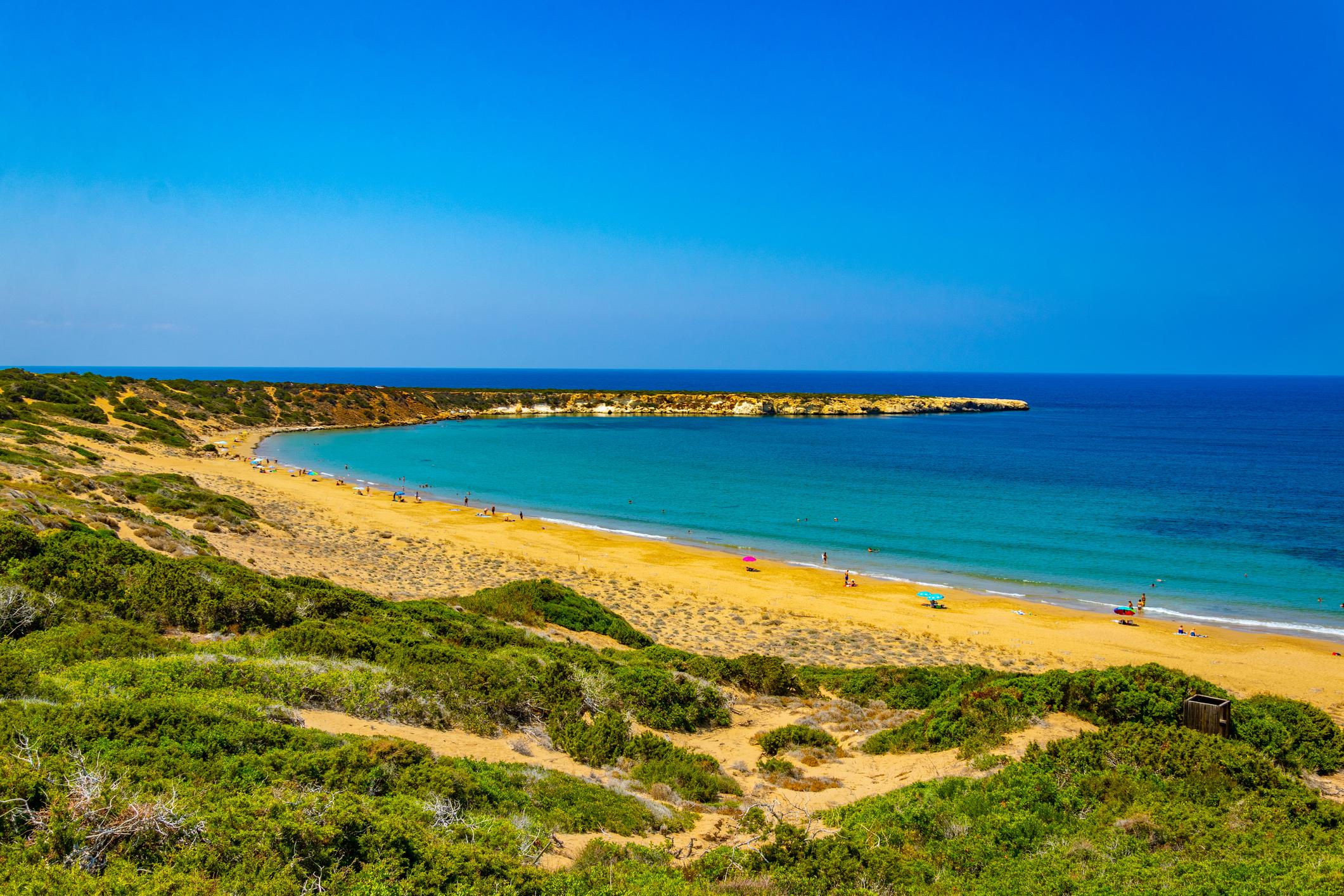
If you are looking for a different side of Paphos — away from organised resorts, busy promenades and developed beaches — Lara Bay offers something completely different.
Located on the Akamas Peninsula, Lara Bay is one of the most natural coastal areas in the Paphos region. Its golden sandy shoreline, clear Mediterranean waters and surrounding landscape create a feeling of wilderness that is increasingly rare along popular Mediterranean coastlines.
But Lara Bay is important for much more than its scenery.
The Lara–Toxeftra coastal area is a protected marine and coastal reserve and provides important nesting habitat for two species of sea turtle: the green turtle and the loggerhead turtle. The area has been protected specifically to reduce human disturbance and safeguard turtle nesting, incubation and hatching.
This combination of spectacular scenery and important wildlife makes Lara Bay one of the most special places to visit in the wider Paphos region.
Where Is Lara Bay?
Lara Bay is situated on the western side of the Akamas Peninsula, in the Paphos District of Cyprus.
The coastline forms part of the Lara–Toxeftra protected area, which extends along approximately 10 kilometres of coastline and includes both terrestrial and marine areas. The protected zone is particularly important for sea turtle nesting habitats.
Lara is located away from the main resort areas of Paphos, which is one of the reasons the beach has retained its natural character.
The journey itself becomes part of the experience as you leave the developed coastline and enter the more rugged landscapes of Akamas.
- • Located on the Akamas Peninsula
- • Paphos District, Cyprus
- • Part of the Lara–Toxeftra protected area
- • Approximately 10 km of protected coastline in the wider reserve
- • Natural and relatively undeveloped environment
- • Important sea turtle nesting area
What Makes Lara Bay Special?
Lara Bay feels very different from the organised beaches around Paphos.
There are no rows of large hotels directly along the beach and no typical resort promenade. Instead, visitors encounter a natural coastline surrounded by the landscapes of the Akamas Peninsula.
The beach is characterised by golden sand, clear Mediterranean water and a rugged natural setting.
But its greatest importance lies beneath the surface of the landscape. Lara and the surrounding Toxeftra coastline provide important nesting habitat for green turtles and loggerhead turtles, making the area an important part of Cyprus's marine conservation efforts.
- • Golden sandy coastline
- • Clear Mediterranean waters
- • Natural Akamas landscape
- • Limited development
- • Important turtle nesting habitat
- • Protected marine and coastal environment
- • Excellent location for nature lovers and photographers
Lara Bay and the Sea Turtles of Cyprus
For many visitors, the biggest reason to visit Lara Bay is the opportunity to learn about Cyprus's sea turtles.
Two species are particularly associated with the Lara–Toxeftra area: the green turtle (Chelonia mydas) and the loggerhead turtle (Caretta caretta). Both use sandy beaches in the area for nesting.
The protected status of the coastline exists to reduce human interference with nesting turtles, their eggs and hatchlings.
During the nesting and hatching season, visitors are expected to follow the conservation rules carefully. The Cyprus Deputy Ministry of Tourism notes that turtle hatchings occur between June and August and specifically advises visitors to respect the guidelines during this period.
Lara Bay is therefore best experienced not simply as a beach, but as a protected natural environment.
- • Green turtle — Chelonia mydas
- • Loggerhead turtle — Caretta caretta
- • Important nesting habitat
- • Turtle nesting and hatching are protected
- • Hatchlings are particularly associated with June–August
- • Visitors must respect conservation guidelines
Lara Bay Turtle Conservation
The Lara–Toxeftra area has been protected since 1989 under Cyprus fisheries legislation, with regulations specifically designed to protect marine turtles and their nesting habitats.
The protected area covers the coastline and extends into the sea. Official environmental documentation describes the reserve as covering approximately 650 hectares, including both terrestrial and marine areas.
The conservation measures are designed to minimise disturbance during nesting, incubation and hatching.
This is why visiting Lara Bay responsibly is so important. The beauty of the beach is closely connected to the fact that it remains a protected natural environment.
- • Protected since 1989
- • Marine and coastal conservation area
- • Protects turtle nesting habitats
- • Protects eggs and hatchlings
- • Managed under Cyprus fisheries legislation
- • Part of the wider protected Akamas environment
Important Rules When Visiting Lara Bay
Lara Bay is not an ordinary organised beach, and visitors need to be aware of the conservation regulations before arriving.
The official turtle conservation information states that placing sunbeds, umbrellas, caravans or tents in the protected area is prohibited. Staying on the beaches or coastal area at night is also prohibited, and vehicles are not permitted to be driven on the beach.
These rules exist to reduce disturbance to nesting turtles and their hatchlings.
Visitors should therefore treat Lara Bay as a protected natural environment rather than a conventional resort beach.
- • Do not place sunbeds or umbrellas in the protected area
- • Do not camp or place tents/caravans
- • Do not remain on the beach or coastal area at night
- • Do not drive vehicles onto the beach
- • Respect turtle nesting areas
- • Follow official signs and local instructions
- • Do not disturb turtles, nests or hatchlings
- • Take rubbish with you
When Is the Best Time to Visit Lara Bay?
Lara Bay can be beautiful throughout the year, but the experience changes depending on the season.
Summer is the most popular period for visitors and coincides with the important turtle nesting and hatching season.
According to Cyprus tourism information, turtle hatchlings are associated particularly with June to August, making this an especially sensitive period for the protected coastline. Visitors should be particularly careful to follow conservation guidelines during these months.
Early morning can be an excellent time to experience the landscape in relative tranquillity, while late afternoon offers beautiful Mediterranean light.
Because overnight stays in the protected coastal area are prohibited, visitors should plan their visit as a daytime experience.
- • Spring — pleasant for nature and landscape exploration
- • Summer — busiest period and important turtle season
- • June–August — turtle hatching period
- • Early morning — quieter atmosphere
- • Late afternoon — beautiful coastal light
- • Night visits/stays in the protected coastal area are prohibited
How to Get to Lara Bay
Getting to Lara Bay is part of the adventure.
Unlike the easily accessible resort beaches around Paphos, the wider Akamas area includes non-tarmacked roads, and official Cyprus tourism itineraries recommend 4x4 vehicles and other suitable transport for excursions to Lara.
The road conditions can vary, particularly after periods of rain, so visitors should plan accordingly and use a suitable vehicle or an organised excursion.
For tourists who do not want to navigate the rougher roads themselves, a guided safari or organised Akamas excursion can be a convenient way to experience Lara Bay while also learning about the protected landscape.
- • Located within the Akamas Peninsula
- • Access includes non-tarmacked roads
- • Road conditions can vary
- • 4x4 vehicles are commonly used for excursions
- • Organised tours are an alternative
- • Check current road conditions before travelling
What to Bring to Lara Bay
Because Lara Bay is much less developed than the organised beaches around Paphos, visitors should arrive prepared.
Bring enough drinking water, sunscreen, a hat and suitable footwear. If you plan to spend time exploring the area, comfortable clothing and sturdy shoes are useful.
It is also important to remember that Lara Bay is a protected natural environment. Avoid bringing anything that could disturb wildlife and take all rubbish with you when you leave.
A camera is worth bringing too. The combination of golden sand, blue water and the rugged Akamas landscape makes the area particularly attractive for photography.
- • Drinking water
- • Sunscreen
- • Hat
- • Sunglasses
- • Swimwear
- • Towel
- • Suitable footwear
- • Camera or smartphone
- • Snacks
- • Rubbish bag
Lara Bay for Nature Lovers
Lara Bay is especially rewarding for travellers who enjoy nature rather than traditional resort facilities.
The surrounding Akamas Peninsula contains a remarkable variety of landscapes, including forests, cliffs, beaches and coastal habitats. Official Cyprus information highlights the area's biodiversity and its importance for marine turtles and other wildlife.
A visit to Lara can therefore be combined with wider exploration of the Akamas Peninsula, including hiking, photography and other outdoor activities.
It is a place where the journey and the landscape are just as important as the beach itself.
- • Nature photography
- • Wildlife observation
- • Hiking
- • Coastal exploration
- • Swimming where conditions and regulations permit
- • Exploring the Akamas landscape
- • Learning about turtle conservation
Lara Bay as Part of an Akamas Adventure
Lara Bay is ideally suited to a wider Akamas adventure rather than a quick beach stop.
The Cyprus Deputy Ministry of Tourism includes Lara Bay as part of an Akamas itinerary that combines the turtle area with other attractions such as the Baths of Aphrodite and traditional villages.
This makes Lara an excellent destination for visitors who want to see the more natural side of Paphos.
A day exploring the Akamas Peninsula can combine beaches, wildlife, mountain landscapes, traditional villages and coastal viewpoints.
For Blue Paphos visitors, this also makes Lara Bay particularly relevant to safari and 4x4 experiences.
Lara Bay and the Akamas Peninsula
Lara Bay is one of the places that helps explain why the Akamas Peninsula is considered such an important natural area.
The peninsula contains extensive forest and coastal landscapes and supports a rich variety of flora and fauna. The official Department of Forests information highlights the presence of both green and loggerhead turtles nesting mainly on the beaches of Lara and Toxeftra.
The area is also associated with hiking, photography, swimming, horseback riding and other outdoor activities.
For visitors staying in Paphos, Lara offers an opportunity to experience a side of Cyprus that feels much more remote and natural than the city's developed coastal areas.
Why Lara Bay Is Worth Visiting
Lara Bay is not about beach clubs, rows of sunbeds or busy promenades.
It is about nature.
It is about the golden coastline of Akamas, the clear Mediterranean Sea and the opportunity to visit an area that plays an important role in the conservation of Cyprus's sea turtles.
Its protected status is exactly what makes the experience special.
When you visit Lara Bay, you are not simply visiting another beach in Paphos. You are entering a protected natural environment where responsible tourism matters.
For travellers looking for nature, wildlife, photography and a genuine sense of adventure, Lara Bay is one of the most memorable places to discover in the Paphos region.